Wicked Problem Project
"How might teachers design their International Baccalaureate Diploma Programme (IBDP) Biology classes so that high exam results are a natural result of genuine inquiry?"
In A More Beautiful Question, Warren Berger argues that the most powerful thing we can do in business, in life, in education, is learn to ask better questions. Not questions that have clean answers, but ones that are genuinely hard and worth sitting with. He calls these beautiful questions.
The question at the center of this project is one I think qualifies: How might teachers design their IB Biology classes so that high exam results are a natural result of genuine inquiry?
I am an IB Biology teacher at an international school in France, and versions of this question have been following me around since I started teaching within the International Baccalaureate Diploma Programme (IBDP), a globally recognized secondary diploma program used for university admission around the world. I love this job, and I genuinely believe in the philosophy of the International Baccalaureate (if you are not familiar with the IB, this overview is a useful starting point, and this page explains the Diploma Programme specifically). The IB learner profile describes students who are inquirers, thinkers, reflective and that is not marketing copy to me. It is actually why I chose to teach within this system.
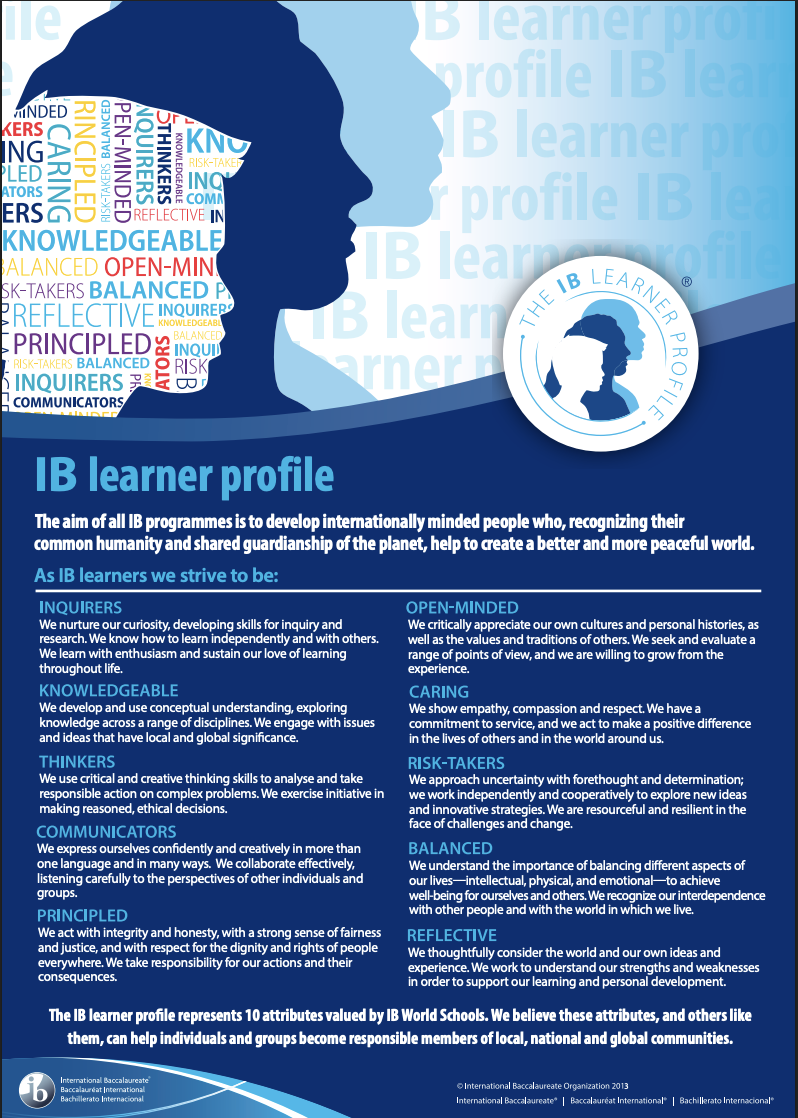
The IB Learner Profile
Which is what makes the tension so hard to shake. The same organization that publishes the learner profile culminates two years of that philosophy in a set of high-stakes, externally marked examinations that universities use to sort applicants. The exams are rigorous, and their credibility matters. But the skills they measure and the skills that genuine scientific inquiry develops are not the same thing. We spend so much time building the content foundation that we rarely get to construct the building.
This is the kind of problem Berger would recognize: it resists easy answers, it implicates the whole system, and asking it honestly forces you to confront some uncomfortable things about what school is actually for. In research terms, this is what is known as a wicked problem; one that is systemic, structurally embedded, and resistant to straightforward solutions. That is the framing I explore in this presentation.
This project was developed for CEP 812: Applying Educational Technology to Issues of Practice at Michigan State University, which asks students to identify a genuine problem in their professional context, research it seriously, and think carefully about where technology might help. The technological angle here lives in the solution: specifically, flipped learning as a way of using tools teachers already have (recorded video, digital reading, online platforms like Kognity) to rebalance where the cognitive work happens. If the problem is that class time gets consumed by content delivery, technology can move that delivery elsewhere and free the room for thinking.
But, flipped learning is not a solution to the larger contradiction. It does not change university admissions culture. It does not alter the structure of IB examinations. It does not reduce the content load. What it can do, in the right context, is create small pockets of space inside a rigid system, moments where inquiry becomes more possible. In a wicked problem, that kind of leverage may be the most realistic form of progress available.
The presentation that follows draws on research, a small survey of IB Biology teachers, and a lot of time sitting with a question I still do not have a clean answer to. Wicked problems do not really have those. But I think the question itself is worth asking, and I hope you find it worth exploring.
You can also explore the presentation in full screen here.
Citations:
Berger, W. (2014). A more beautiful question: The power of inquiry to spark breakthrough ideas. Bloomsbury.
International Baccalaureate Organization. (n.d.). About the IB. https://www.ibo.org/about-the-ib/
International Baccalaureate Organization. (n.d.). Diploma Programme. https://www.ibo.org/programmes/diploma-programme/
Kognity. (n.d.). Kognity. https://kognity.com/
Dulun, O., & Lane, J. F. (2023). Supporting critical thinking skills needed for the International Baccalaureate Diploma Programme: A content analysis of a national and two international education programs in Turkey. Thinking Skills and Creativity, 47, 101211. https://doi.org/10.1016/j.tsc.2022.101211
Lineham, R. (2013). Is the International Baccalaureate Diploma Programme effective at delivering the International Baccalaureate mission statement? Journal of Research in International Education, 12(3), 259–282. https://doi.org/10.1177/1475240913509765
Mindorff, D. (2023). The use of data mining to achieve the objectives of open-ended inquiry in the context of IB biology classrooms (Doctoral dissertation, University at Buffalo, State University of New York).
Smoler, J. D. (2018). Pedagogical strategies in practical report writing and teacher perceptions of the IBDP Biology 2016 internal assessment: A multiple case study (Master’s thesis, Flinders University).
International Baccalaureate Organization. (2023, May 27). Introducing our Systems Transformation Pathway: Leadership for Just Futures [Video]. YouTube. https://youtu.be/-lSXu_q-cLQ
